

Standing water, musty smells, and soft floors usually trace back to one root cause. Here’s how to find it, fix it, and keep your crawl space dry for good.
If you’ve ever caught a whiff of something musty the moment you walk through your front door, there’s a good chance the smell isn’t coming from your living room — it’s coming from underneath it. Crawl spaces sit below ground level, which puts them directly in the path of rainwater, groundwater, and humidity. Left unchecked, that moisture doesn’t stay contained down there. It creeps into your home’s structure, your air quality, and eventually your utility bills.
The good news is that crawl space moisture is almost always fixable once you know what’s causing it. This guide breaks down where the water is coming from, why it’s more than just a minor nuisance, and the practical steps you can take to dry things out for the long term.
What Causes Water in a Crawl Space?
Moisture rarely enters a crawl space through just one path. More often, it’s a mix of factors working together — which is why a single fix, like adding a dehumidifier, doesn’t always solve the whole problem.
Here are the most common culprits:
- Poor exterior drainage. Clogged gutters, short downspouts, or ground that slopes toward your house instead of away from it can funnel rainwater straight to your foundation, where it finds its way in.
- Groundwater pressure. After a heavy storm, saturated soil around your home builds up hydrostatic pressure. That pressure can push moisture through foundation walls and slabs even when there’s no visible crack.
- Plumbing and HVAC leaks. A slow drip from a pipe or a poorly sealed duct can quietly raise humidity for months before anyone notices.
- Condensation. When warm, humid air meets cooler surfaces — like ductwork or exposed pipes — it condenses into water droplets, adding moisture even when there’s no leak at all.
Because these causes often overlap, a thorough inspection usually turns up more than one issue at once. Fixing only the most obvious source, like a leaky pipe, may leave the groundwater or condensation problem untouched.
Why Crawl Space Moisture Is a Bigger Deal Than It Looks
It’s tempting to think of a damp crawl space as a minor, out-of-sight issue. In reality, moisture down there rarely stays down there. Because the space is directly connected to the rest of the house through shared air and structural framing, problems tend to travel upward.
Here’s what unmanaged moisture can lead to over time:
- Mold and wood rot. Damp wood framing and insulation create ideal conditions for mold, which can slowly weaken joists, beams, and subflooring.
- Higher energy bills. Moist air takes more energy to heat and cool than dry air, so a damp crawl space can force your HVAC system to work harder — and cost you more — year-round.
- Poor indoor air quality. Many homes have a natural airflow connection between the crawl space and the floors above. That means mold spores, musty odors, and allergens can travel straight into your living space.
- Pest problems. Cockroaches, termites, and rodents are all drawn to damp, dark environments. A wet crawl space can become an entry point — and a breeding ground — for unwanted guests.
Modern, well-insulated homes are often built tighter than older ones, which helps with energy efficiency but also means moisture has fewer natural ways to escape once it gets in. That’s part of why crawl space issues have become more common in newer construction, not less.
Signs You Might Have a Moisture Problem
Crawl space moisture doesn’t always announce itself with visible standing water. Often, the first clues show up somewhere else in the house. Watch for:
- A musty smell on the main floor. This is frequently the earliest warning sign, especially if the odor lingers even after cleaning.
- Humidity that won’t quit. If your home feels sticky or damp even with the air conditioning running, excess moisture below the floor could be to blame.
- Sagging or springy floors. Wood weakened by prolonged moisture exposure can start to feel soft, uneven, or bouncy underfoot.
- Visible mold or condensation. Check exposed insulation, floor joists, and ductwork for mold growth or beads of moisture, particularly after humid weather.
- More bugs or rodents than usual. A sudden uptick in pest sightings, especially near baseboards or utility areas, can point to a damp crawl space nearby.
If any of these sound familiar, it’s worth crawling in (or hiring a professional to do it) for a closer look before the damage spreads further.
How to Fix Water in a Crawl Space
Once you’ve identified where the moisture is coming from, the fix usually involves two goals: keeping outside water away from the foundation, and controlling humidity inside the space itself. Most homes need a combination of the following:
1. Improve Exterior Drainage
Start outside, since this is often the cheapest and most impactful fix. Make sure gutters are clear and downspouts extend at least 5–10 feet away from the foundation. Check that the ground around your home slopes away from the house rather than toward it — a slope of about 6 inches over the first 10 feet is a good rule of thumb. These changes alone can stop a significant amount of water before it ever reaches your crawl space.
2. Install a Vapor Barrier
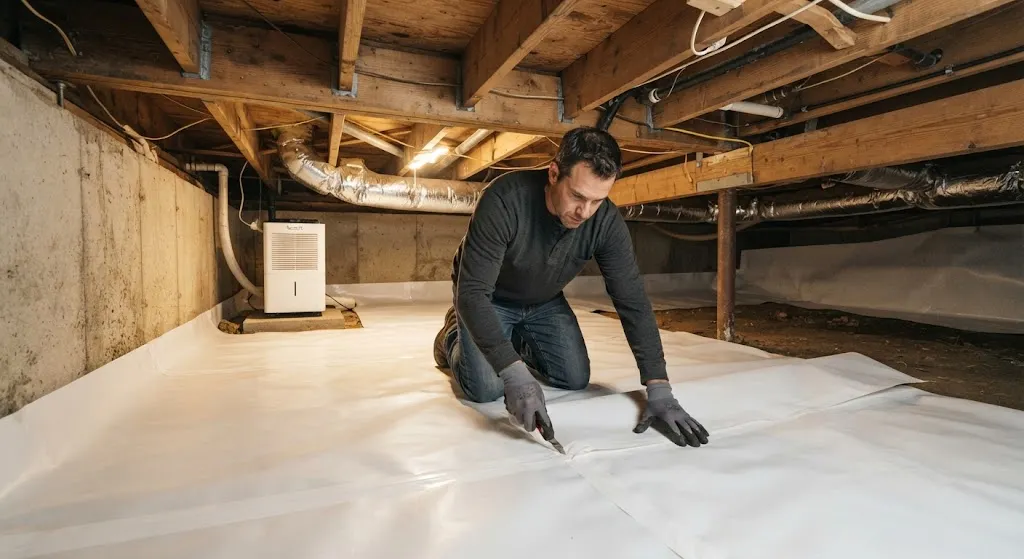
A heavy-duty plastic or reinforced polyethylene liner laid across the crawl space floor blocks moisture from rising up through the soil. For best results, the barrier should also run partway up the foundation walls, with all seams and edges taped or sealed. This single step can dramatically cut down on ground-level humidity.
3. Add a Sump Pump
If your crawl space regularly collects standing water or floods after storms, a sump pump system gives that water somewhere to go instead of pooling under your home. Pair it with a drainage channel (sometimes called a French drain) along the interior perimeter to funnel water toward the pump.
4. Control Humidity With a Dehumidifier
Even after drainage and vapor barrier work, crawl spaces can retain humidity from the surrounding air. A crawl-space-rated dehumidifier keeps moisture levels in check, which helps prevent mold growth and condensation on pipes and ductwork.
5. Seal Air Leaks and Vents
Older homes often have open crawl space vents designed to let air circulate — but in humid climates, this can actually let more moisture in than it lets out. Sealing vents and air leaks, sometimes called “encapsulation” when done thoroughly, helps create a controlled, stable environment rather than one at the mercy of outdoor humidity swings.
Most effective crawl space fixes combine at least two or three of these steps. Drainage improvements handle the water trying to get in from outside, while vapor barriers and dehumidifiers manage the moisture already inside.
When to Call a Professional
Minor drainage fixes, like extending downspouts, are manageable DIY projects for most homeowners. But if you’re dealing with standing water, structural damage, or signs of significant mold growth, it’s worth bringing in a foundation or crawl space specialist. They can pinpoint whether groundwater pressure, plumbing leaks, or drainage issues are the main driver — and recommend a fix sized to the actual problem rather than a one-size-fits-all solution.
The Bottom Line
A damp crawl space is never just a crawl space problem. Left alone, moisture can work its way into your home’s structure, air quality, and energy bills. The upside is that most crawl space water issues come down to a handful of fixable causes — poor drainage, groundwater pressure, plumbing leaks, or condensation — and each one has a proven solution.
Start outside with drainage and grading, then move inside with a vapor barrier, humidity control, and sealed vents. Tackle the sources one by one, and you’ll not only stop the immediate moisture problem — you’ll protect your home’s foundation and air quality for years to come.
