

Before You Light the First Fire
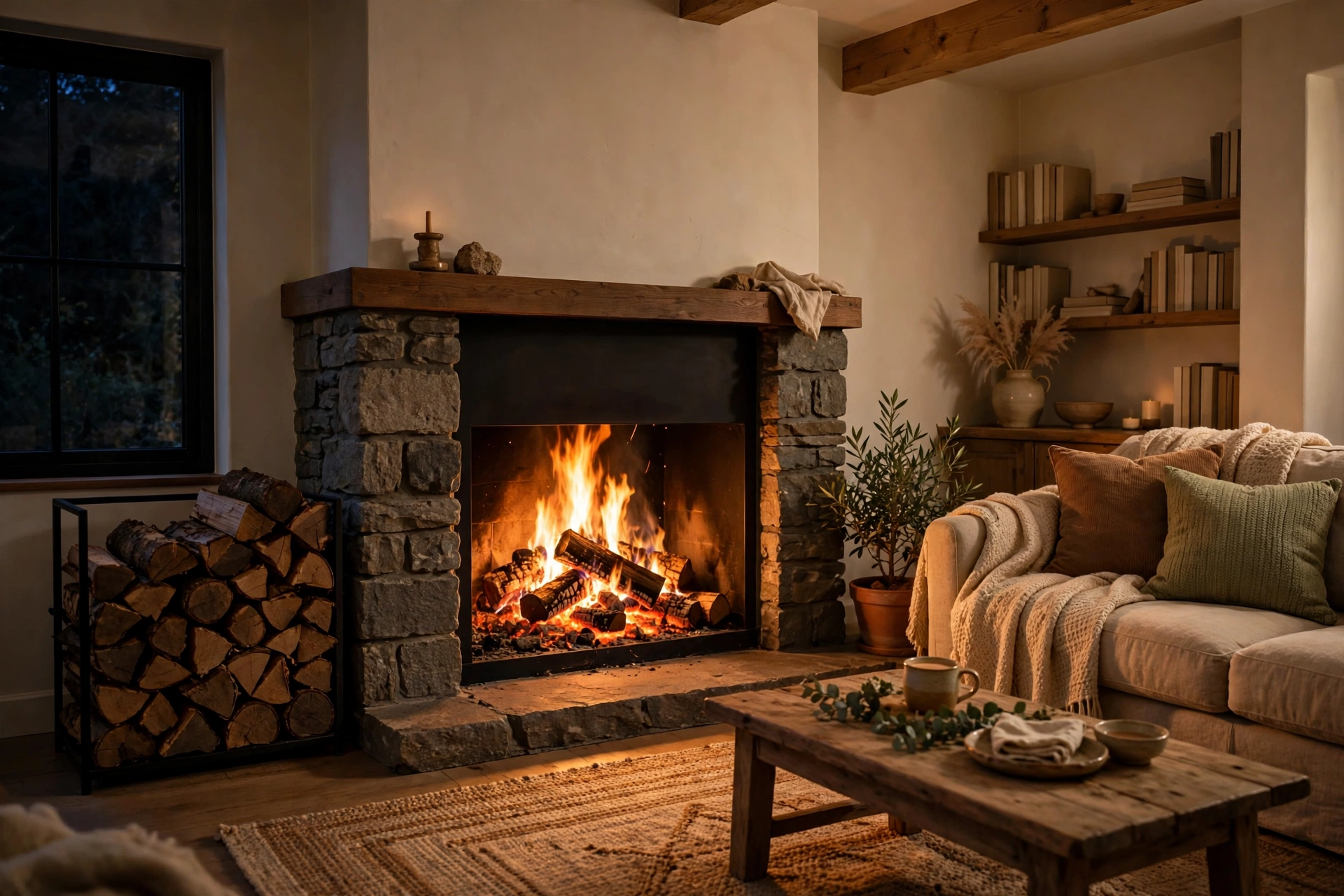
There’s nothing like the first fire of the season — unless it’s the one that reveals a chimney problem. The Chimney Safety Institute of America attributes over 20,000 chimney fires a year in the US to creosote buildup, and most happen in the first cold months when neglected fireplaces roar back to life. Whether you burn wood, run gas logs, or just like the ambiance of electric, fall maintenance is what separates a cozy evening from a 911 call. Do this checkup now, before you need the heat.
Wood-Burning Fireplaces: The Annual Must-Dos
1. Get the Chimney Swept and Inspected (Every Year)
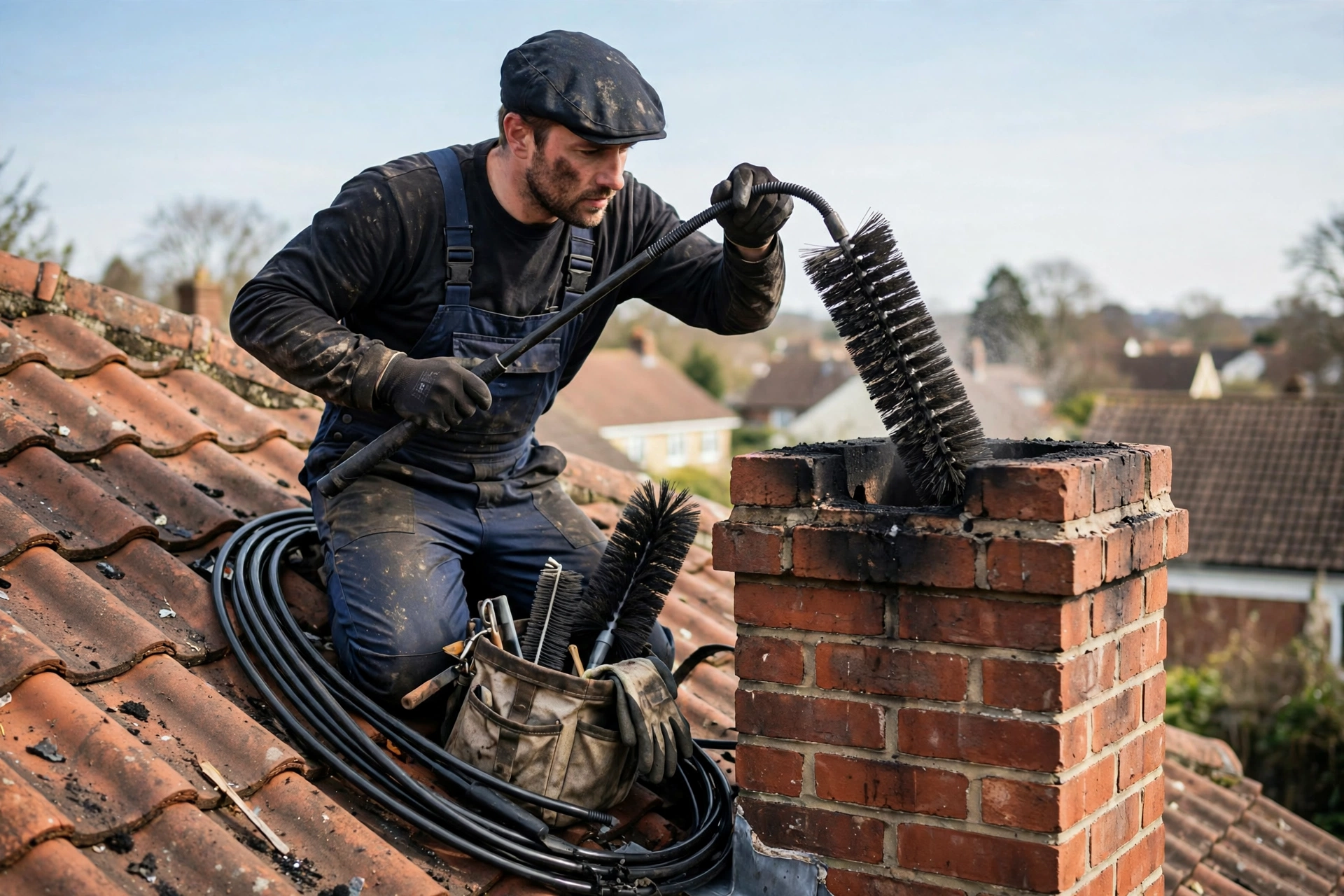
This is non-negotiable for wood burners. A certified chimney sweep (look for CSIA certification) removes creosote — the flammable tar that condenses from wood smoke — and inspects for cracked flue liners, damaged masonry, and blockages. Creosote buildup of 1/8 inch or more is considered a fire hazard. Cost: $150–$300. Schedule in early fall before sweeps book up.
2. Check the Chimney Cap and Crown
The cap keeps out rain, animals, and debris; the crown (the concrete top) seals the masonry. A missing cap invites bird nests and water damage — both common causes of “mystery” fireplace problems. If the crown is cracked, water seeps into the masonry and freeze-thaw cycles destroy it from inside. Both are cheap fixes compared to a chimney rebuild.
3. Inspect the Firebox and Damper
Look for cracked firebrick, crumbling mortar, and a damper that opens and closes fully. A damper stuck open sends your heated air straight up the chimney all winter (an open damper is like leaving a window open 24/7); one stuck closed fills the room with smoke. The damper should seal snugly when closed — hold a lit incense stick near it; smoke movement means it’s leaking.
Burn Right: The Wood Matters as Much as the Chimney
- Burn only seasoned hardwood (oak, maple, ash) dried 6–12 months to under 20% moisture. A $30 moisture meter removes all guesswork.
- Never burn: treated/painted wood (toxic fumes), plywood or particleboard (chemical binders), driftwood (salt corrodes metal), trash, or cardboard in quantity (it sparks and floats up the flue).
- Wet wood is the #1 cause of rapid creosote buildup — it smolders instead of burning, coating your flue in tar.
- Store wood off the ground, top-covered, sides open, at least 30 feet from the house (termites love woodpiles against the foundation).
Gas Fireplaces: Lower Maintenance, Not Zero
Gas fireplaces don’t make creosote, but they have their own checklist:
- Annual service: have a technician clean the burner, check the pilot/ignition, inspect the thermocouple and thermopile, and verify the glass seal.
- Venting: direct-vent units need the exterior termination clear of nests, snow, and shrubs; vent-free units need the room’s oxygen levels respected — follow the manufacturer’s room-size requirements exactly.
- Carbon monoxide detector: mandatory in any home with gas appliances — test it monthly, replace every 5–7 years.
- Ceramic logs: keep them positioned exactly as the manual shows; misplaced logs cause sooting and carbon monoxide.
- Smell gas? Don’t light anything, don’t flip switches — leave the house and call the gas company.
Electric Fireplaces: Almost Effortless
Dust the heater intake, check the cord for damage, and keep the 3-foot clearance rule like any space heater — see our space heater safety guide for the full rules. That’s genuinely about it.
The Pre-Season Checklist (Do This Every Fall)
- Chimney swept and inspected (wood) / serviced (gas).
- Cap in place, crown intact.
- Damper opens, closes, and seals.
- Firebox brick and mortar sound.
- Smoke and CO detectors tested with fresh batteries.
- Fire extinguisher accessible and charged (ABC-rated, within 10 feet of the fireplace).
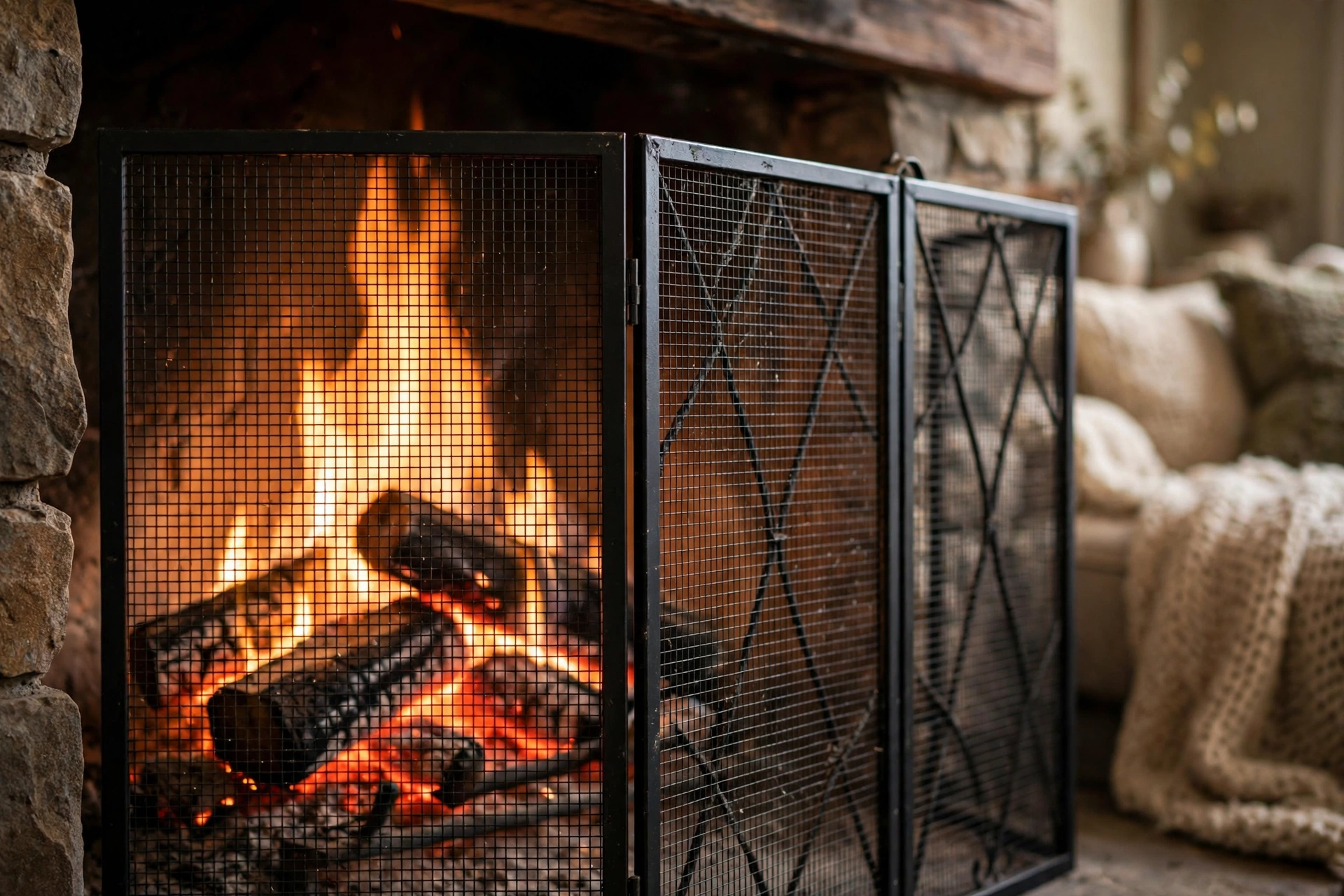
- Screen or glass doors in good condition — sparks escape through damaged mesh.
- Hearth clear of combustibles; mantel decorations fire-safe.
- Seasoned wood stocked (wood burners).
Safe Burning Habits
- Start small: kindling and small splits first; add larger logs once the flue is warm (a warm flue draws properly — a cold flue spills smoke into the room).
- Keep the screen closed whenever the fire burns — popping embers travel farther than you think.
- Never leave a fire unattended — not “just for a minute.”
- Let ashes cool completely (at least 72 hours) before disposal, in a metal container with a lid, stored away from the house. “Cold” ashes start fires every year.
- Don’t overload: a roaring inferno overheats the flue and nearby framing.
Warning Signs: When to Stop Using It Immediately
- Smoke entering the room (beyond initial startup)
- A strong, hot, roaring sound in the chimney (possible chimney fire — call 911)
- White staining (efflorescence) on exterior masonry — water intrusion
- Bits of flue tile in the firebox — liner failure
- Animals or debris visible in the flue
- Gas smell, soot on the glass that returns quickly after cleaning, or yellow lazy flames on gas logs (should be blue at the base)
Chimney Fires: What They Are and What To Do
A chimney fire sounds like a freight train or roaring jet in the flue, often with visible flames or dense smoke from the chimney top. If you suspect one: get everyone out, call 911, and don’t try to fight it yourself. After any chimney fire — even a small one — have the chimney professionally inspected before using it again; the intense heat can crack flue liners invisibly.
Chimney Liners: The Part You Can’t See (But Must Maintain)
The flue liner — clay tile, metal, or cast-in-place — is what actually contains the fire’s heat and gases. Damaged liners let heat reach wood framing and let carbon monoxide leak into the house. Warning signs: crumbling tile pieces in the firebox, white staining outside, or a sweep’s report of cracks. Relining costs $2,500–$7,000+ depending on height and material — expensive, but it’s the chimney’s most critical safety component. If your sweep says the liner is compromised, don’t use the fireplace until it’s fixed. No exceptions.
Fireplace Inserts: Upgrading an Old Fireplace
If you love the fireplace but hate the heat loss, an insert — a sealed firebox that slides into the existing opening — transforms efficiency:
- Wood inserts: 60–80% efficient vs. ~10% for an open fireplace. $2,000–$4,500 installed.
- Gas inserts: push-button convenience, 70–85% efficient, $2,500–$5,000 installed.
- Electric inserts: cheapest ($300–$1,500), zero venting needs, but purely decorative heat.
An insert plus a proper liner often costs less than rebuilding a damaged chimney — and gives you a genuinely useful heat source instead of an energy drain.
How Much Does Fireplace Maintenance Cost? (Annual Budget)
- Chimney sweep + inspection: $150–$300/year (wood burning).
- Gas fireplace service: $100–$200/year.
- Chimney cap replacement: $150–$500 (one-time, lasts decades).
- Crown repair: $500–$1,500 depending on damage.
- Smoke + CO detectors: $50–$100 every 5–7 years for replacements.
- Seasoned firewood: $150–$400 per cord depending on region.
Total typical annual cost for a wood fireplace: $300–$700. Compare that to the average $12,000+ cost of repairing fire damage — maintenance is the cheapest insurance you own.
Fireplaces and Home Efficiency
An open wood fireplace is actually an energy loser while burning — it pulls heated room air up the chimney. To minimize the penalty: keep the damper closed when not in use (this alone saves significant heat), consider glass doors to reduce air loss, and never heat the house primarily with an open fireplace. For real winter efficiency, pair fireplace ambiance with the measures in our winterizing checklist and home energy audit guide.
Kids, Pets, and Fireplaces
- Use a sturdy hearth gate for toddlers — fireplace glass and surrounds get hot enough to cause serious burns.
- Teach kids the fireplace is never a toy; matches and lighters locked away.
- Pets love hearth warmth — keep beds at safe distance and never leave pets alone with an active fire.
- Stockings and decorations: beautiful on the mantel, dangerous when the fire’s lit — use flameless candles during burn season.
Renting With a Fireplace? Know Your Responsibilities
Tenants: you typically handle safe operation (seasoned wood only, screen closed, ashes cooled) while the landlord handles structural maintenance (chimney sweeping, liner integrity, detector installation). Get the arrangement in writing — and never assume the chimney was swept; ask for the sweep’s receipt before your first fire. Landlords: an unswept chimney in a rental is a liability nightmare. Schedule the annual sweep yourself and document it.
The Bottom Line
Sweep the chimney, burn seasoned wood, keep detectors working, never leave it unattended. Annual maintenance costs less than a single emergency visit — and it’s the difference between a cozy tradition and a catastrophe.
