

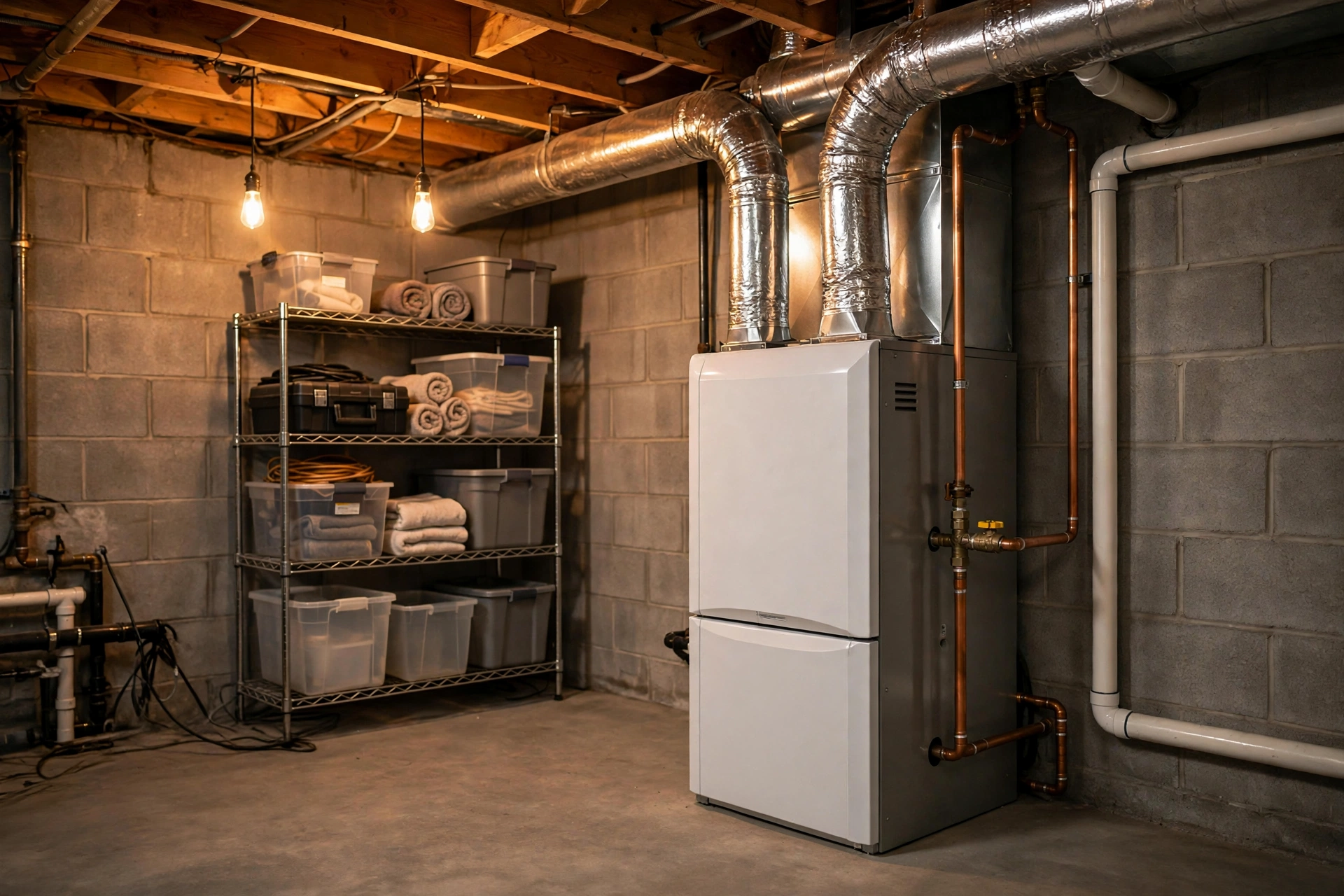
Your Furnace Has One Job — Don’t Let It Fail in January
Furnaces fail at the worst possible moment: the coldest night of the year, when every HVAC company in town is booked solid and emergency rates are double. The cruel irony is that most of those breakdowns are preventable. A furnace that gets annual maintenance lasts 15–20 years and runs efficiently; a neglected one dies at 10–12, wastes fuel every single day, and quits exactly when you need it most. Fall is tune-up season. Here’s the complete checklist — what you can do yourself this weekend, and what to leave to a pro.
Why Fall Maintenance Matters (The Numbers)
- A dirty furnace uses 15–25% more fuel to produce the same heat.
- Heating is typically 40%+ of a home’s energy bill — a neglected furnace is a monthly tax on your wallet.
- The average emergency furnace repair costs $300–$600; a planned tune-up costs $80–$150.
- Cracked heat exchangers (the #1 furnace safety hazard) are caught during maintenance — not during breakdowns.
DIY Task 1: Replace the Filter (The 5-Minute Miracle)
This is the single most impactful furnace task, and most people do it wrong:
- Check monthly, replace every 1–3 months during heating season (monthly if you have pets).
- Match the size exactly — printed on the old filter’s frame (e.g., 16x25x1).
- Don’t over-filter: a super-high MERV filter on an old furnace restricts airflow and strains the blower. MERV 8–11 suits most systems; go higher only if your system is rated for it.
- Arrow direction matters: the arrow on the filter points toward the furnace (in the direction of airflow).
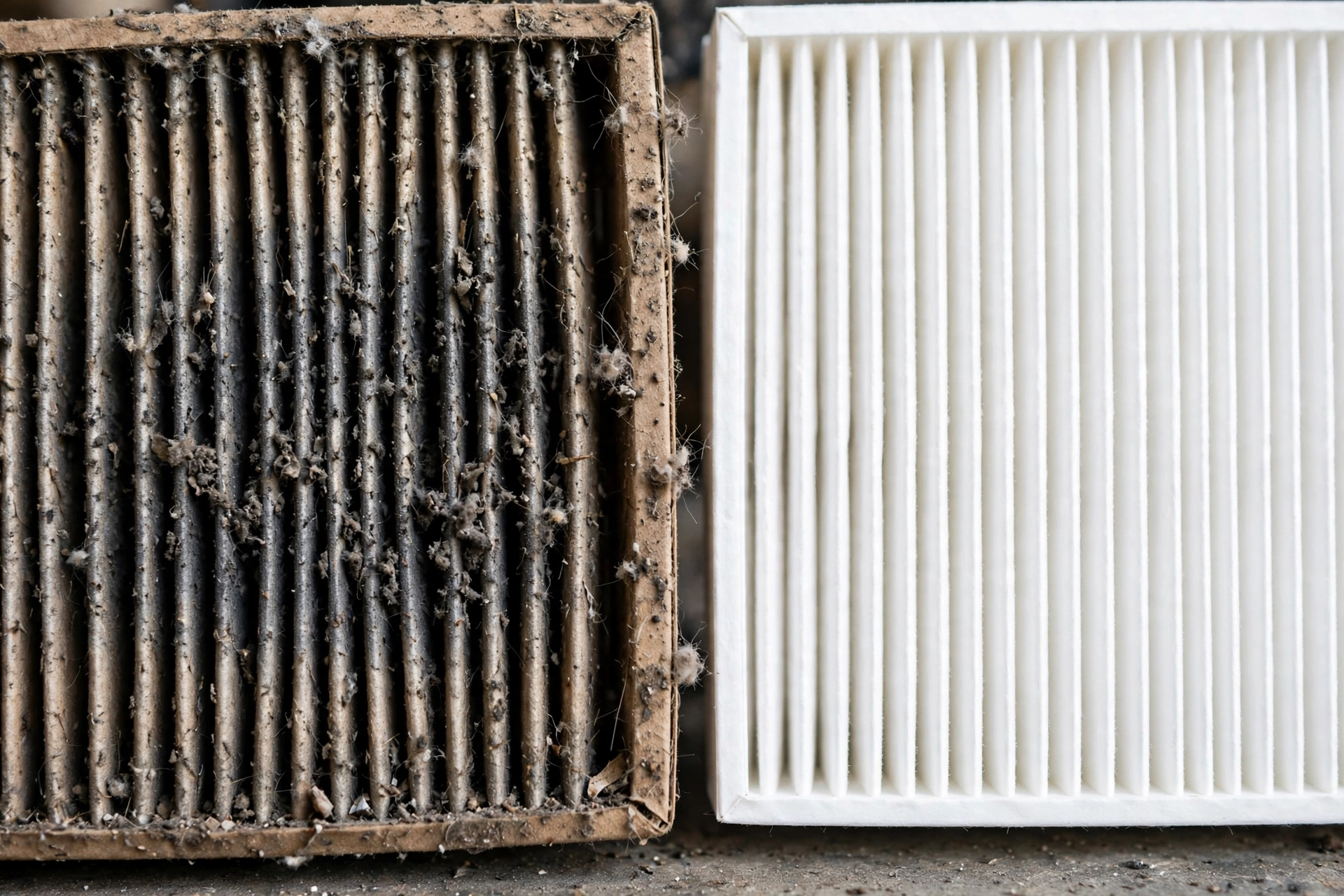
A clogged filter is the #1 cause of furnaces overheating and shutting down — and the #1 cause of service calls that end with an embarrassed homeowner.
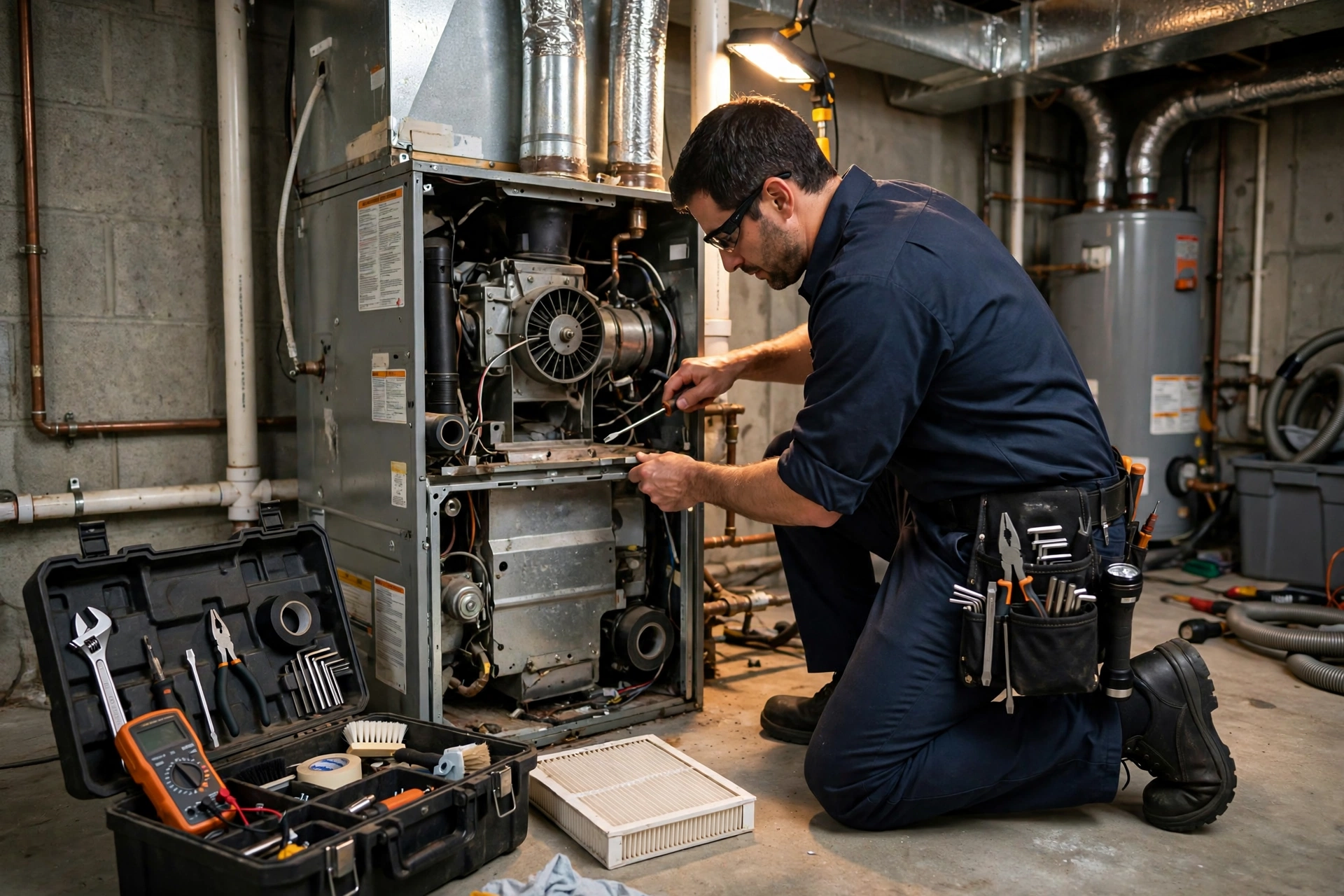
DIY Task 2: Clean Around the Furnace
- Clear a 3-foot zone around the furnace — no boxes, paint cans, or storage leaning against it.
- Vacuum dust from the blower compartment (power off first) and wipe down the exterior.
- Make sure supply and return vents throughout the house are unblocked by furniture, rugs, or curtains.
- Check that the flue pipe (the metal exhaust going up) is firmly connected with no rust holes.
DIY Task 3: Test the Thermostat
- Switch to heat mode and raise the setpoint 5 degrees — the furnace should fire up within a minute.
- Listen for smooth startup (no banging, screeching, or repeated clicking).
- If you have an old manual thermostat, consider upgrading to a programmable or smart model — proper setbacks save ~10% on heating. Our home energy audit guide covers thermostat strategy in detail.
- Replace thermostat batteries now, not when the heat dies at 2 AM.
DIY Task 4: Inspect What You Can See
- Burner flames (gas furnaces): peer through the inspection window — flames should be steady and blue. Yellow, flickering flames mean dirty burners or combustion problems — call a pro.
- Listen: new rattles, booms on startup, or high-pitched squeals all warrant investigation.
- Smell: a brief dusty smell on first fall startup is normal. Persistent burning, electrical, or rotten-egg smells are not — rotten egg means gas leak: leave and call the gas company.
- Check the condensate drain (high-efficiency furnaces): make sure the drain line isn’t clogged — a blocked drain shuts the furnace down.
The Professional Tune-Up: What’s Included
Once a year, have a licensed HVAC tech do the full service ($80–$150, best scheduled in September/October before the rush):
- Inspect the heat exchanger for cracks (carbon monoxide risk).
- Clean and adjust burners; check gas pressure and flame sensor.
- Test safety controls: limit switches, rollout switches, pressure switches.
- Inspect the flue and venting for blockages or corrosion.
- Check electrical connections, capacitors, and the blower motor.
- Measure temperature rise across the heat exchanger (verifies efficiency).
- Lubricate moving parts where applicable.
- Test carbon monoxide levels in the flue gas.
Ask for the combustion analysis numbers — a good tech will share them. This visit is also when small issues (a weakening capacitor, a corroding flue) get caught before they become January emergencies.
Carbon Monoxide: The Invisible Risk
Every fuel-burning furnace produces carbon monoxide; a cracked heat exchanger or blocked flue can push it into your living space. CO is odorless and kills silently:
- Install CO detectors on every level and outside sleeping areas — test monthly, replace every 5–7 years.
- Never ignore headaches, dizziness, or nausea that improve when you leave the house.
- If a CO alarm sounds: get out, call 911, don’t re-enter until cleared.
- Keep the furnace area and all vents clear of snow and debris all winter.
Warning Signs Your Furnace Needs Attention Now
- Short cycling (turning on and off rapidly)
- Rooms heating unevenly — some hot, some cold
- Utility bills climbing with no change in usage
- Excessive dust (failing filtration or duct leaks)
- The furnace is 15+ years old and repair bills are recurring
- Yellow burner flames or soot around the furnace
Repair or Replace? The 50% Rule
If a repair costs more than 50% of a new furnace’s price and the unit is 12+ years old, replace it. Modern high-efficiency furnaces (95%+ AFUE) use dramatically less fuel than 80% units from the 2000s — the fuel savings often pay back the upgrade within 5–8 years. Get at least three quotes, and size the new unit properly — oversized furnaces short-cycle and waste money.
Ductwork: The Forgotten Half of Heating
Your furnace can be perfect and your house still cold — if the ducts leak. The Department of Energy estimates typical duct systems lose 25–30% of heated air into attics, crawl spaces, and wall cavities:
- Inspect accessible ducts for disconnected joints, crushed sections, and gaps at registers.
- Seal with mastic (not duct tape — it fails within years) — a weekend DIY with huge payoff.
- Insulate ducts in unconditioned spaces (attics, crawl spaces) — bare metal ducts in a cold attic are radiators heating nobody.
- Don’t close too many vents — closing more than 20% of registers increases system pressure and can damage the furnace.
Furnace Types Compared
- Gas (natural gas): most common, cheapest to run where gas is available, 80–98% AFUE. Needs annual combustion safety checks.
- Electric: 100% efficient at point of use but expensive where electricity rates are high; simplest and safest (no combustion).
- Oil: common in the Northeast; requires fuel deliveries, annual nozzle/filter service, and tank maintenance.
- Heat pumps: increasingly replacing furnaces — 2–3x more efficient than electric resistance, and they cool in summer. Cold-climate models now work below 0°F.
Whatever type you have, the maintenance principles are the same: clean filters, clear airflow, annual professional eyes on the system.
Smart Thermostats and Furnaces: Getting the Most From Both
- Setbacks save real money: 7–10°F lower for 8 hours daily (sleep + work) cuts heating bills ~10%.
- Don’t set back steam/heat-pump systems aggressively — recovery costs can erase savings; 3–4°F is the sweet spot there.
- Use the learning features: geofencing that drops temps when everyone leaves beats any fixed schedule.
- Check compatibility first: older furnaces with proprietary controls may need an adapter or pro install — a $150 pro install beats a fried control board.
- Monitor runtime reports: a sudden jump in heating hours with no weather change means something’s wrong — filter, ducts, or the furnace itself.
First Cold Snap: Startup Day Checklist
When the first real cold arrives, run this 10-minute check before you actually need the heat:
- Set the thermostat to heat, 5 degrees above room temp — confirm the furnace fires.
- Walk to every vent — warm air flowing everywhere, no cold rooms.
- Sniff near the furnace for anything unusual (brief dusty smell = normal).
- Check the CO detector display reads zero.
- Confirm the outdoor exhaust vent isn’t blocked by leaves or nests.
Finding a problem on a 55°F October afternoon beats finding it on a 15°F January night.
Pair It With Whole-House Winter Prep
A tuned furnace still wastes money if the house leaks heat. Combine your furnace tune-up with sealing drafts, checking attic insulation, and servicing the rest of your winter systems — our winterizing checklist walks through the full house prep, and if you supplement with portable heat, our space heater safety guide keeps that safe too.
The Bottom Line
New filter, clear vents, thermostat test, annual pro tune-up. Two hours of your fall and $100 for the tech — versus a $500 emergency call on the coldest night of the year. The math isn’t close.
